
Case studyHousing disrepair case study: roof leak or condensation?
This housing disrepair case study shows how our RICS Chartered Surveyor, acting as an expert witness, used temperature, relative humidity and dew point readings to establish what was really causing the damp in a disputed claim, and why the evidence did not support a statutory breach.
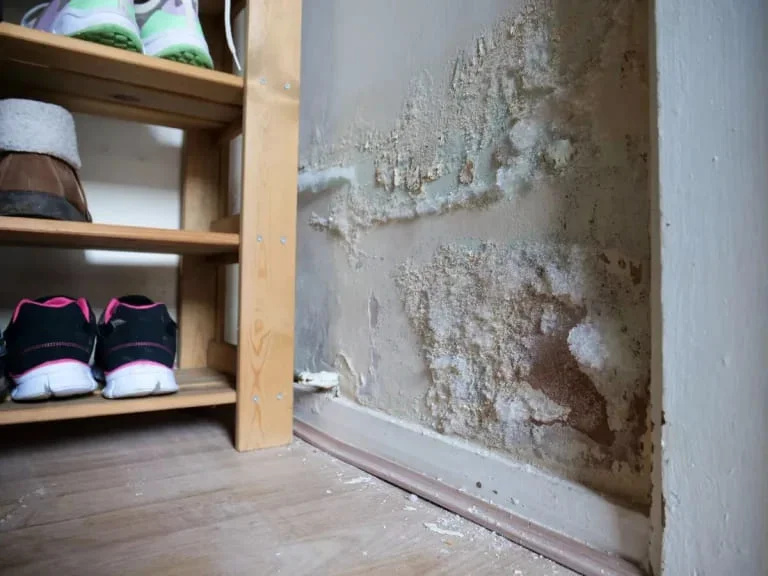
We are often instructed as expert witness in housing disrepair matters, and in most cases the allegations relate to damp. Understanding how a property is designed to function is essential to giving correct advice to the instructing party.
At a glance
| Detail | Summary |
|---|---|
| Matter | Housing disrepair claim, damp-related allegations |
| Allegation | Roof leak, supported by the occupants’ own expert report |
| Our role | Expert witness, Part 35 compliant report |
| Readings on the day | Ambient temperature 14°C; relative humidity 85% |
| Outcome | No evidence of a statutory breach giving rise to the issues identified |
The challenge
The occupants complained of a roof leak and had an expert report supporting their allegations. Our task was to establish, independently, whether the damp was caused by disrepair for which the landlord was responsible, or by something else.
Allegations of damp are rarely straightforward. Water getting in from outside, moisture rising from the ground and condensation forming inside the home can all produce similar staining and mould, but they have very different causes and very different consequences for liability. For an overview, see our guide to the types of damp.
Our approach
We follow the same evidence-led process on every disrepair instruction.
1. Claim received
We received the letter of claim and established the extent of the allegations, so we understood exactly which issues we were dealing with.
2. Property inspection
Our RICS Chartered Surveyor carried out a thorough assessment of all accessible areas and documented the evidence relating to each allegation, in order to reach an evidence-based opinion.
As part of the inspection, the surveyor mapped the ambient temperature in each room, together with relative humidity (RH) and dew point, to build a picture of how the property was performing. The readings recorded were:
- Ambient temperature: 14°C
- Relative humidity: 85%
Relative humidity is a snapshot in time, but it is a useful tool for understanding how temperature, or the lack of it, increases the chance of condensation. Our guide to relative humidity and condensation explains the relationship in more detail.
3. Analysis
The surveyor noted that the internal ambient temperature was significantly lower than average, with an elevated relative humidity.
Using psychrometric data (the physics of air, moisture and temperature), we showed how raising the ambient temperature to within normal parameters of 18 to 21°C would significantly lower the relative humidity and reduce the likelihood of condensation.
There are often other contributing factors, but understanding the inter-relationship between temperature, relative humidity and condensation was central to this case.
4. Court evidence
We provided a comprehensive report compliant with Part 35 of the Civil Procedure Rules, setting out our findings and the evidence supporting our professional opinion.
The outcome
Our client received a thorough Part 35 compliant report, with supporting evidence, concluding that there was no evidence of a statutory breach giving rise to the issues identified.
Why it matters
Damp and mould are serious and must be taken seriously. But the cause determines the remedy, and in a disrepair claim it also determines liability. An independent expert who measures how a home is actually performing can separate genuine disrepair from conditions driven by low heating or high moisture levels, so the right problem is fixed and the claim is decided on the evidence.
Social landlords also now have fixed timescales for investigating damp and mould under Awaab’s Law, which makes early, accurate diagnosis even more important.
How we can help
Our director John Jackson is an experienced expert witness surveyor and a member of the Expert Witness Institute (EWI). We prepare independent reports for residential and commercial clients, including:
- Housing disrepair survey and expert witness reports under CPR Part 35
- Damp and mould expert witness reports for solicitors
- Damp and mould surveys for landlords and homeowners
Get in touch to see how our RICS Chartered Surveyors and experts can help you. Call 0151 374 0905 or email office@lansdownassociates.co.uk.